
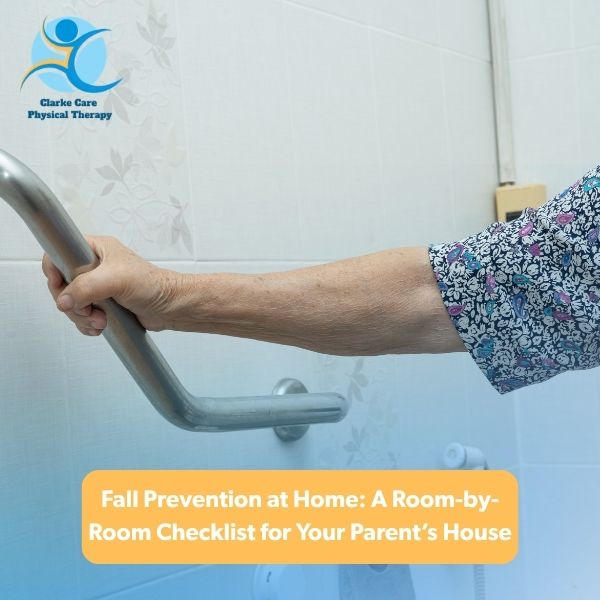
The fastest way to make a parent’s home safer is to walk through it room by room and fix the hazards most falls start with: loose rugs, dim lighting, stairs without sturdy handrails, and bathrooms without grab bars. Most of these fixes are inexpensive, and many take only a few minutes.
It’s worth doing because falls are common. According to the CDC, more than one in four adults 65 and older falls each year, and fewer than half of them tell their doctor. That means a fall may have already happened without you hearing about it.
That’s the short answer. The longer answer is the walkthrough itself. Bring this fall prevention checklist on your next visit, and move through the house the way your parent does on a normal day.
Floors and walkways
Start by walking the path your parent takes most often: bed to bathroom, bathroom to kitchen, kitchen to their favorite chair.
- Clear paths: If you have to step around furniture to get through a room, move it so the path is open.
- Throw rugs: Remove them, or secure them with double-sided tape or a non-slip backing so they can’t slide.
- Clutter: Pick up papers, shoes, books, and boxes from the floor, especially along walkways.
- Cords: Coil or tape electrical cords next to the wall so they never cross a walkway.
Stairs and steps
Check every set of stairs, inside and outside, including the front steps and any steps down to a garage or basement.
- Objects: Keep the stairs completely clear. A stack of mail or a pair of shoes on a step is an easy thing to miss.
- Loose or uneven steps: Have them repaired.
- Lighting: There should be a light and a switch at both the top and the bottom of each staircase.
- Handrails: Make sure they’re secure, on both sides of the stairs, and as long as the stairs themselves.
- Traction: If the steps are smooth or slippery, add non-slip treads.
Kitchen
Watch how your parent reaches for things they use every day.
- Shelves: Move everyday items, like dishes, mugs, and food, to lower shelves at about waist level.
- Step stools: If your parent needs one, choose a sturdy stool with a bar to hold onto. A chair should never be used as a step stool.
- Spills: Keep a towel handy so spills get wiped up right away.
Bathroom
The bathroom combines wet surfaces with a lot of standing, sitting, and stepping over things, which makes it one of the most important rooms to get right.
- Grab bars: Have grab bars installed next to the toilet and both inside and next to the tub or shower. A towel bar isn’t built to hold a person’s weight, so it shouldn’t be used as one.
- Non-slip surfaces: Put a non-slip rubber mat or self-stick strips on the floor of the tub or shower.
- Night-light: A night-light in the bathroom makes middle-of-the-night trips safer.
Bedroom
Getting up at night means moving in low light while still half asleep, so this room deserves extra attention.
- Lamp: Place a lamp close enough to the bed that it can be turned on before getting up.
- Night-lights: Add night-lights along the path from the bed to the bathroom. Some turn on automatically when the room gets dark.
- Phone: Keep a phone within reach of the bed in case your parent falls and can’t get up.
Throughout the house
- Lighting: Brighter bulbs make stairs, edges, and obstacles easier to see. Replace burned-out bulbs right away.
- Footwear: Shoes worn both inside and outside the house are safer than going barefoot or wearing loose slippers.
Printing a home safety checklist for older adults to bring along makes the walkthrough easy to repeat each season.
What a home walkthrough can’t catch
Fixing the house addresses only part of the picture. The CDC also points to factors a walkthrough won’t reveal, such as leg strength, balance, vision, and medications that can cause dizziness or drowsiness. If your parent has fallen, seems unsteady, or has started holding onto furniture to get around, tell their doctor. Ask about a medication review and a yearly eye exam as well.
When strength or balance is part of the problem, in-home balance and fall prevention therapy on Long Island looks at both sides of the issue at once: how your parent moves and the home they move through. A physical therapist evaluates the same stairs, bathroom, and bed covered in this checklist, which is a big part of what to expect at a first in-home physical therapy visit.
The short version
- More than one in four adults 65 and older falls each year, and fewer than half tell their doctor
- Clear walking paths, and remove or secure throw rugs and cords
- Add a light and switch at the top and bottom of every staircase, plus handrails on both sides
- Keep everyday kitchen items at waist level, and use a step stool with a bar instead of a chair
- Install grab bars by the toilet and tub, and add non-slip mats
- Light the path from bed to bathroom, and keep a phone within reach
- Talk to your parent’s doctor about strength, balance, vision, and medications
If you’re worried about a parent’s balance or safety at home, request an appointment or call (516) 559-6751. Clarke Care Physical Therapy provides in-home physical therapy across Nassau County, Suffolk County, and Queens.